The monthly statement from my savings account showed interest earned: $0.02. Two cents, on $1,800. I took a screenshot so I could be mad about it later, and then I got mad about it right away instead.
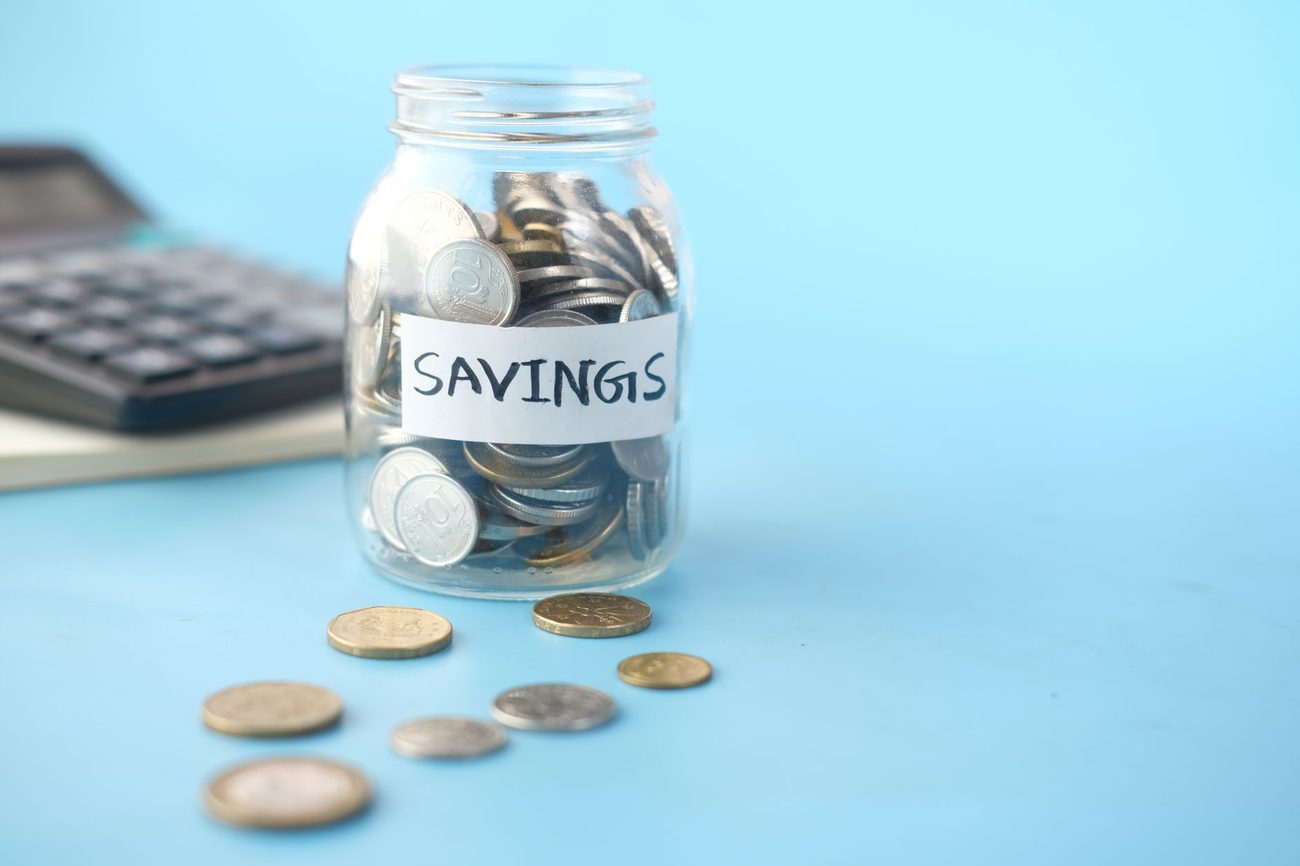
That $1,800 is my whole emergency fund. It's been sitting at the same big bank where I opened my first account in high school, and the rate was 0.01%. I'd never really looked, because the money wasn't supposed to do anything except exist. But money that just exists at 0.01% is quietly losing ground to prices at the grocery store.
What a high-yield savings account actually is
A high-yield savings account is a regular savings account, usually at an online bank, that pays a much higher rate than the typical big-bank savings account. Online banks don't have branches to pay for, so they can offer more. The rate is variable, which means it can go up or down over time, but the account is still a plain savings account. No stock market, no lock-up period.
The part I cared most about was safety. The ones I looked at were all FDIC-insured, which means deposits are protected up to $250,000 per depositor, per bank, per ownership category if the bank fails. My $1,800 is well inside that. A credit union would have a similar protection through the NCUA. I checked the FDIC status on the regulator's own lookup tool for every bank I considered rather than trusting the marketing page.
How I picked one
I'm not going to name the bank, and honestly the specific one matters less than the checklist. Here's what I compared across four options:
- The current APY, and whether it was a teaser rate that drops after a few months.
- Monthly fees or minimum balance requirements. I wanted zero of both.
- How long transfers to my checking take. Most were one to two business days.
- Whether it was FDIC-insured, confirmed independently.
- Whether the app and website were easy enough that I'd actually log in.
The one I chose pays 3.8% APY, with no fees and no minimum. Transfers to checking take a day, sometimes two. That delay is on purpose, as far as I'm concerned. It's an emergency fund, not a second checking account. If I can't pull it out for a sale in ten seconds, good.
The math
At 3.8% APY, $1,800 earns about $68 over a year if the rate stays the same, or roughly $5.70 a month. Compare that to my $0.02. Is $5.70 going to change my life? No. But it's real money for doing nothing, and it grows as the fund grows. My goal for the end of the year is $6,000, and at that size it would be closer to $19 a month.
The bigger change is psychological. The old savings account was linked to my checking at the same bank, and I could move money over with one tap. I did that more than once last year for things that were not emergencies. Concert tickets count as an emergency only in my heart.
Opening the account took about fifteen minutes online. It asked for my Social Security number and ID, which is normal for opening any bank account, and it didn't do a hard credit check, so my 668 score didn't move. I linked my checking account with the routing and account numbers, waited for two tiny test deposits to confirm the link, and then transferred the $1,800.
I left the old big-bank savings account open with a few dollars in it for now, because closing it was a separate phone call and I wanted to make sure the new one worked first. I'll close it once I've seen a full month of interest show up.
I also set an automatic transfer from checking for the day after each payday. It's small for now, since most of my extra money is going at my credit card until that balance is gone. Once the card is paid off, the transfer gets bigger.
My dad, who reads every bill twice, asked me which bank it was and then told me to check the insurance thing myself. I already had. He looked proud in the way where he pretends to be looking at the TV.
First month's interest posts at the end of May. I'm expecting about $5.70, and I'll probably screenshot that too.