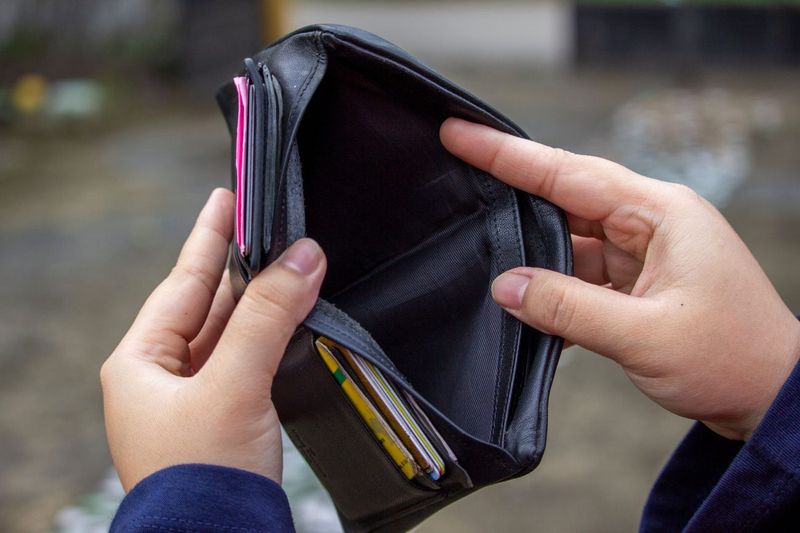
I found the card at the bottom of my old backpack while cleaning out the closet in my childhood bedroom. Blue, a little scratched, my name embossed in the slightly crooked way of a card issued to a college freshman in 2019. My first credit card.
For about a week in June, after I'd paid off my card balance, I wanted to cut it up. Close it, call it done, never owe 27.24% interest again. I'm glad I talked to someone first, because closing it would have been a mistake for my credit.
What the card is
It's a student card I opened at 19. It has a $1,500 limit, no annual fee and a high interest rate that only matters if I carry a balance, which I'm not going to do again. It's my oldest credit account by about three years. My student loans came after, and so did the second card I opened in 2022.
It costs me nothing to keep open. That's the whole first argument. If it had an annual fee, the math would be different, and I'd have looked into whether the issuer could switch it to a no-fee version first.
Why closing it would have hurt
There are two main reasons, and I had to look both up.
The first is utilization. Your credit utilization is your total card balances divided by your total card limits. Right now my cards add up to $4,500 in limits. If I closed this one, I'd drop to $3,000. Today my balances are close to zero, so it barely matters. But if I ever have a month with a $600 balance on a statement, that's 13% of $4,500 versus 20% of $3,000. A bigger total limit gives me more room for normal life without the score dipping.
The second is account age. Scores look at how long you've had credit, including the age of your oldest account and the average age of all of them. Here's the part that surprised me: under the most common scoring models, a closed account in good standing can stay on your report for up to ten years and keep counting toward your history during that time. So closing it wouldn't have wrecked my age overnight. But eventually it would fall off, and my oldest account would suddenly be three years younger. Keeping it open means that clock keeps running in my favor.
My score is 724 this month, up from 709 in June. Nothing about the card changed except that it stayed open and paid in full.
The risk of an unused card
The catch is that if you never use a card, the issuer can decide to close it for inactivity. There's no universal rule on how long that takes, and I'd rather not find out. A closed card is a closed card, whether I closed it or they did.
So I gave it one small job. It pays a single recurring subscription, about $11 a month, and the full statement balance is paid automatically from my checking account every month. The card gets used, the balance never carries over, and I don't have to think about it. I physically keep the card in a drawer at my parents' house, not in my wallet, which removes most of the temptation.
The card was never the problem. The problem was the Rogers Park year: paying my share of rent, ordering takeout three nights a week, and putting the gap on credit while telling myself I'd catch up. A card with a $1,500 limit didn't do that. I did, across two cards.
I know some people close their cards as a kind of fresh start, and I get it. If having the card open makes you spend, closing it can be the right call for you even if your score takes a small hit. A few points are worth less than not going back into debt. For me, putting it on a single autopay bill and out of reach is enough of a fence.
I put the backpack in the donation pile and the card back in the drawer. It's six years old now. If I leave it alone, it'll be twenty years old someday, and so will my credit history. That seems like a strange thing to look forward to, but here we are.